
News
Knix Is Taking Its Kids' Line Into 350 Target Stores
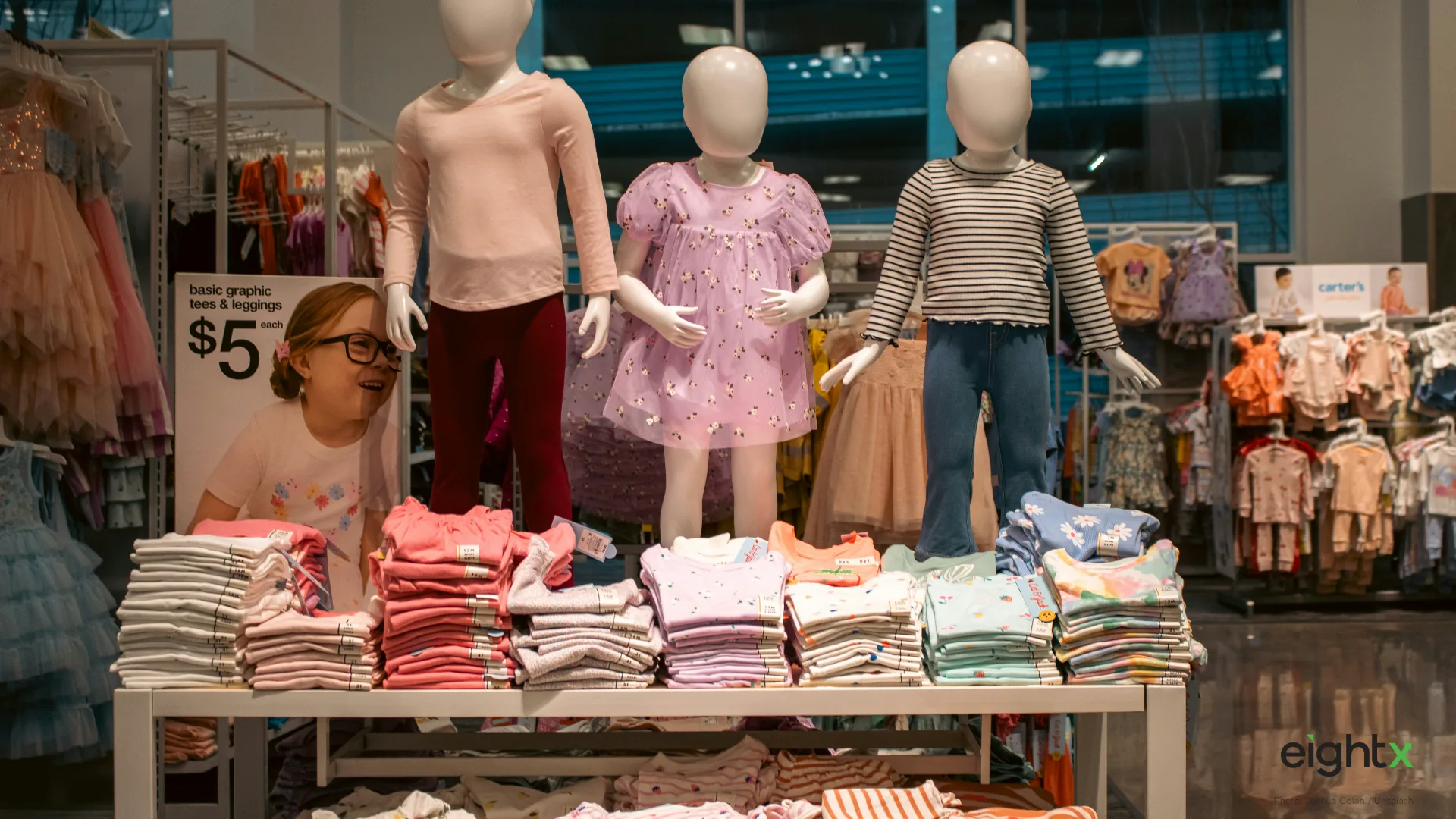
In June 2026, Knix announced its biggest wholesale move yet: its kids' line, KT by Knix, is launching in more than 350 Target stores nationwide. It matters because Knix is a DTC brand that passed $1 billion in direct sales, and it is now leaning into physical retail to fight rising customer acquisition costs, the same wholesale pivot playing out across DTC in 2026.
Key Takeaways
- Knix is launching its kids' sub-brand, KT by Knix, in more than 350 Target stores across the US, its first nationwide wholesale deal and its largest to date, with a campaign due later in June 2026.
- This is a billion-dollar DTC brand (over $1B in cumulative direct sales, $150M+ annual revenue, 80% owned by Essity since a 2022 deal) deliberately moving into mass wholesale, not a startup chasing shelf space.
- The stated reason is rising customer acquisition cost. Wholesale lets a retailer's foot traffic do the acquiring, and reaches Gen Z and Gen Alpha shoppers a DTC site never touches.
- The trade-off is margin and cash. Wholesale typically means selling at roughly half of retail and waiting on net terms, so it is a different economic model, not extra DTC revenue.
- The smart detail: Target-exclusive products (like exclusive color two-packs) protect Knix's DTC pricing from direct comparison, which is how you go wide without training your own customers to wait for the cheaper channel.
If you run a DTC brand, the Knix news this month is a mirror. Knix, a brand that built a billion-dollar business selling period underwear and intimates directly to customers online, is putting its kids' line into more than 350 Target stores. It matters because Knix is not a struggling startup grabbing for shelf space. It is a profitable, billion-dollar brand deciding that the next chapter of growth runs through a big-box retailer, and the reason it gives is the same one keeping you up at night: it costs too much to acquire a customer online.
For how we think about the economics underneath this move, see our work on the cash drag of wholesale net terms and average CAC by ecommerce vertical, and how a fractional CFO for ecommerce models a channel decision like this one.
What happened
In June 2026, Knix announced its biggest wholesale expansion to date: launching its kids' sub-brand, KT by Knix, in more than 350 Target stores across the US, with a marketing campaign slated for later in the month. It is Knix's first nationwide wholesale deal and the largest in its history.
The brand behind it is substantial. Knix has passed $1 billion in cumulative direct-to-consumer sales, does over $150 million in annual revenue, and grew its North American wholesale sales about 90% year over year. The Swedish hygiene giant Essity bought 80% of Knix in 2022 in a deal reported at $320 million. Knix already sold through Bloomingdale's and Revolve in the US and Holt Renfrew and Sporting Life in Canada, and it has a Free People partnership planned for later in 2026, but Target is a different order of magnitude: mass-market, national, and built on foot traffic.
Chief Commercial Officer Nicole Tapscott framed the shift plainly: the company is "evolving from a digital disruptor to an omnichannel retailer," meeting customers in physical stores to address rising acquisition costs and to reach younger Gen Z and Gen Alpha shoppers.
Know the most you can pay to acquire a customer.
Get our Max CAC calculator: set your unit economics, get your ceiling.
Check your inbox. We'll send the Maximum CAC calculator shortly.
Why a billion-dollar DTC brand wants a Target shelf
For a decade, the DTC story was that you did not need retailers. You owned the customer, the data and the margin, and you acquired demand with cheap, targetable ads. That model broke on one number: the cost to acquire a customer kept climbing as ad auctions got more crowded and tracking got worse.
Wholesale is the pressure valve. When you put product on a Target shelf, Target's foot traffic does the acquiring. You are not paying $40 to win a click and hope it converts. You are paying a margin discount to a retailer who already has the customer walking past your product. For a brand fighting CAC, that is a rational trade, and it is why so much of the 2021-era DTC cohort is now chasing shelf space instead of the next ad platform.
The kids' line into Target is also a customer-acquisition move disguised as a product launch. Parents shopping Target for their kids meet the Knix brand for the first time, at someone else's acquisition cost, and some of them become full-price Knix customers later. That is reach a DTC site cannot buy at the same price.
The trade-off: you give up half the unit and wait for the cash
Here is the part the press release will not dwell on. Wholesale is not extra DTC revenue. It is a different, thinner economic model.
A retailer typically buys at around half of the retail price (keystone), so for every $100 of product sold on a Target shelf, the brand collects something closer to $50, not the full $100 it would keep selling direct. And the retailer pays on net terms, often net-60, so the cash shows up two months after the goods ship, not at checkout.
That is not a reason to avoid wholesale. It is the reason to model it as its own business. The DTC dollar and the wholesale dollar have completely different margins, cash timing and acquisition costs behind them. Blend them together and a brand can grow revenue while quietly diluting its profit and stretching its working capital, which is exactly how fast-growing brands run out of cash while the top line looks great.
The smart detail most coverage will skip
Knix is launching Target-exclusive products, including exclusive color two-packs. That is not a merchandising footnote, it is channel-conflict management.
If the identical SKU sits on a Target shelf at a lower effective price than your own site, you have just taught your best customers to buy it cheaper somewhere else. Exclusive colors and packs mean the Target assortment does not line up one-to-one against the DTC range, so Knix can reach Target's audience without giving its full-price direct customers a reason to defect. Any brand going into wholesale should copy this move.
What to watch
- Whether blended margin holds. As wholesale grows from 90%-year-over-year small to a real share of revenue, watch the blended gross and contribution margin. Lower-margin wholesale volume can lift revenue and lower profitability at the same time.
- The working-capital build. Net terms plus the inventory to fill 350 stores ties up cash. A brand owned by a deep-pocketed parent like Essity can fund that easily; an independent brand copying the playbook has to plan the cash, not just the launch.
- DTC health, not just total growth. The point of wholesale is to lower blended CAC and reach new customers, not to replace a healthy direct business. If DTC revenue stalls while wholesale grows, the brand is shifting channels, not adding them.
The operator takeaway
Knix is doing the defining DTC move of 2026: using a retailer's traffic to beat the cost of buying attention online. It is the right move for a brand at its scale, and the exclusive-product detail shows it is being done with discipline.
The lesson for your brand is not "go get a Target deal." It is to treat wholesale as a separate margin model with its own contribution math, its own cash timing and its own anti-cannibalization plan. Run that model honestly before you sign, and wholesale can be a powerful lower-CAC growth lever. Skip it, and you can sell more product than ever while making less money on each unit and waiting two months to get paid for it.
Sources and methodology
The Target launch (KT by Knix in more than 350 stores, first nationwide wholesale deal, Target-exclusive products, campaign timing), Knix's scale ($1 billion-plus cumulative DTC sales, $150 million-plus annual revenue, 90% year-over-year North American wholesale growth), the Essity ownership (80%, 2022, reported $320 million), the prior wholesale presence (Bloomingdale's, Revolve, Holt Renfrew, Sporting Life) and Free People plans, and CCO Nicole Tapscott's omnichannel and customer-acquisition-cost comments are from Glossy's June 2026 report. The DTC-versus-wholesale per-unit economics in the chart are an illustrative keystone example (wholesale at roughly 50-55% of retail, on net terms), not Knix's disclosed terms, which the company has not published.
Frequently Asked Questions
what did Knix announce with Target?
Knix is launching its kids' sub-brand, KT by Knix, in more than 350 Target stores across the US, with a marketing campaign due later in June 2026. It is Knix's first nationwide wholesale deal and the largest in its history, and it includes some Target-exclusive products such as exclusive color two-packs. It is a major step in Knix's shift from a direct-to-consumer brand into an omnichannel one.
how big is Knix as a business?
Knix has surpassed $1 billion in cumulative direct-to-consumer sales and now does over $150 million in annual revenue. Its North American wholesale sales grew about 90% year over year. The Swedish hygiene multinational Essity bought 80% of Knix in 2022 in a deal reported at $320 million, so this is a well-capitalized, billion-dollar brand, not an early-stage startup.
why is a billion-dollar DTC brand moving into wholesale?
Customer acquisition cost. Acquiring customers through paid digital ads keeps getting more expensive, so brands lean on a retailer's foot traffic to do some of the acquiring for them. Knix's commercial chief framed it as evolving from a digital disruptor into an omnichannel retailer, and getting in front of younger Gen Z and Gen Alpha shoppers a DTC website rarely reaches on its own.
does wholesale make a DTC brand more or less profitable?
It depends. Wholesale usually means selling to the retailer at roughly half of the retail price, and getting paid on net terms rather than at checkout, so the per-unit margin and the cash timing are both worse than DTC. What it buys you is cheaper customer acquisition and reach. Wholesale adds profit only if the lower margin plus the cheaper acquisition nets out ahead, which is a model you have to run, not assume.
why is Knix launching Target-exclusive products?
To protect its own pricing. If the exact same product sits at a lower effective price in Target, you train your DTC customers to buy it cheaper elsewhere. Target-exclusive colors and packs mean the assortments do not directly compete, so Knix can reach Target's audience without cannibalizing its full-price direct business. It is a textbook way to manage channel conflict.
should my DTC brand go into wholesale?
Only after you model it as a separate margin business, not extra DTC revenue. Work out your contribution margin at wholesale pricing, plan the working capital for net terms, and decide how you will keep wholesale from undercutting your DTC prices, usually with differentiated or exclusive assortments. If the channel-level math clears your threshold and you can fund the cash gap, it can be a strong, lower-CAC growth lever. If not, it is revenue that quietly costs you money.