
News
Ulta Just Mapped Gen Alpha Beauty Buyers. The Surprise Is What It Does to Your CAC.
Ulta Beauty and NielsenIQ surveyed 500+ US kids and teens ages 8-17 plus parents and found influencers, AI, and ads each drive under 20% of product discovery, while parents (55%), peers (52%), and social media (51%) dominate, with 77% of the cohort also valuing in-store validation. For a beauty DTC brand, that means paid-social CAC models misprice this cohort; the real acquisition channels are parents, peers, and shelf presence.
Key Takeaways
- Ulta and NielsenIQ's Smart Beauty Study found parents are the single most influential discovery channel for Gen Alpha beauty buyers at 55%, ahead of peers (52%) and social media (51%). Influencers, AI tools, websites and ads each drove under 20%.
- This cohort is hybrid, not online-only: 78% discover products online, but 77% value brick-and-mortar validation about equally. In-store trial alone drives 39% of discovery. A DTC-only channel model undercounts how this generation actually decides.
- 35% of the cohort use AI personalization tools and 30% use AI-powered search, with boys adopting faster than girls. AI discovery is real but still smaller than parents, peers or the store shelf.
- Boys show strong, near-equal interest in fragrance and hair care alongside girls, per Ulta CMO Kelly Mahoney. A beauty brand modeling its buyer as girls-only is underpricing a real second audience.
- About one-third of parents want age-appropriate assortments, clear labeling and knowledgeable staff, which is a real cost line (packaging, compliance, staff training), not a marketing footnote, for any brand chasing this cohort.
Ulta Beauty just published a study that should reset how a beauty brand plans its acquisition budget for its next generation of buyers. Partnered with NielsenIQ, Ulta surveyed more than 500 US children and teens ages 8 to 17, plus their parents, and the result is a discovery map where influencers, AI tools, websites and ads each register under 20% of influence. Parents, peers and the in-store shelf do the heavy lifting instead.
That is not a marketing curiosity, it is a CAC problem. If the channels a beauty brand typically buys, paid social, creator partnerships, programmatic display, barely register with this cohort, then the influencer spend benchmarks most brands budget against do not translate cleanly to Gen Alpha. Here is the CFO read on what Ulta's data means for your channel mix, your funnel, and your margin.
What happened
Glossy reported in early July 2026 that Ulta Beauty partnered with NielsenIQ on a "Smart Beauty Study," surveying more than 500 US children and teens ages 8 to 17, plus their parents, in April and May 2026. The study set out to map how this cohort, often called Gen Alpha, learns about and buys beauty and wellness products.
The discovery ranking was clear: parents were the most influential channel at 55%, followed by peers at 52% and social media at 51%. In-store trial drove 39% of discovery. Influencers, AI tools, brand websites and advertising each drove under 20%. At the same time, 78% of the cohort discover products online, while 77% value brick-and-mortar validation about equally, making this a hybrid shopper rather than a channel purist in either direction.
The study also found that 35% use AI personalization tools and 30% use AI-powered search, with boys adopting AI tools earlier than girls. On category interest, boys showed strong pull toward fragrance and hair care, and Ulta CMO Kelly Mahoney called out that "their feelings about beauty and wellness seem to be almost equal between boys and girls, and that's really unique." About one-third of parents said they want age-appropriate assortments, clear labeling and knowledgeable in-store staff.
| Gen Alpha Smart Beauty Study | Figure |
|---|---|
| Parents (most influential discovery channel) | 55% |
| Peers | 52% |
| Social media | 51% |
| In-store trial | 39% |
| Influencers, AI, websites, ads (each) | Under 20% |
| Discover products online | 78% |
| Value in-store validation equally | 77% |
| Use AI personalization tools | 35% |
| Use AI-powered search | 30% |
| Parents wanting age-appropriate assortment, labeling, staff | About one-third |
Source: Glossy, reporting on the Ulta Beauty and NielsenIQ Smart Beauty Study.
Returns are quietly eating your margin. See by how much.
Get our Real Cost of Returns calculator: plug in your numbers, see the true hit per return.
Check your inbox. We'll send the Real Cost of Returns calculator shortly.
Your CAC model is pointed at the wrong channels
Most beauty CAC models are built around the channels a brand can buy: paid social, influencer seeding, programmatic. Ulta's data says those channels drive under 20% of discovery for this cohort, combined with AI and websites. That is not a small miss, it is a structural mismatch between where the ad budget goes and where the actual decision gets made.
The channels that do the work here, parents, peers, in-store trial, are not ones you purchase on a CPM. You earn them through product trust, word of mouth and retail presence. That changes what "efficient acquisition" looks like. Compare it against the CAC by marketing channel benchmarks most beauty brands plan against: those numbers describe paid channels performing as expected for adult buyers. For a Gen Alpha-facing SKU line, pouring the same dollars into the same paid mix is closer to burning budget against a channel that was never going to be the primary lever.
Two audiences, one funnel: the parent is the payer
The 55% parent-influence figure is also a funnel design problem. A Gen Alpha shopper is rarely the one swiping the card. Your funnel effectively has two audiences: the kid who wants the product and the parent who has to approve, and usually pay for, the purchase. That splits your creative into two jobs, one that builds appeal with the teen and one that builds trust with the parent, and it raises real costs that do not show up in a standard unit economics model built for a single-decision-maker adult buyer.
Concretely: about one-third of parents in the study want age-appropriate assortments, clear labeling and knowledgeable staff. That is packaging cost, compliance and labeling spend, and staff training investment at retail partners, all of which sit above the line before a single unit sells. Price your AOV and your gross margin with that added cost baked in, not as a marketing nicety layered on after the model is built.
Retail presence is a CAC channel, not just distribution
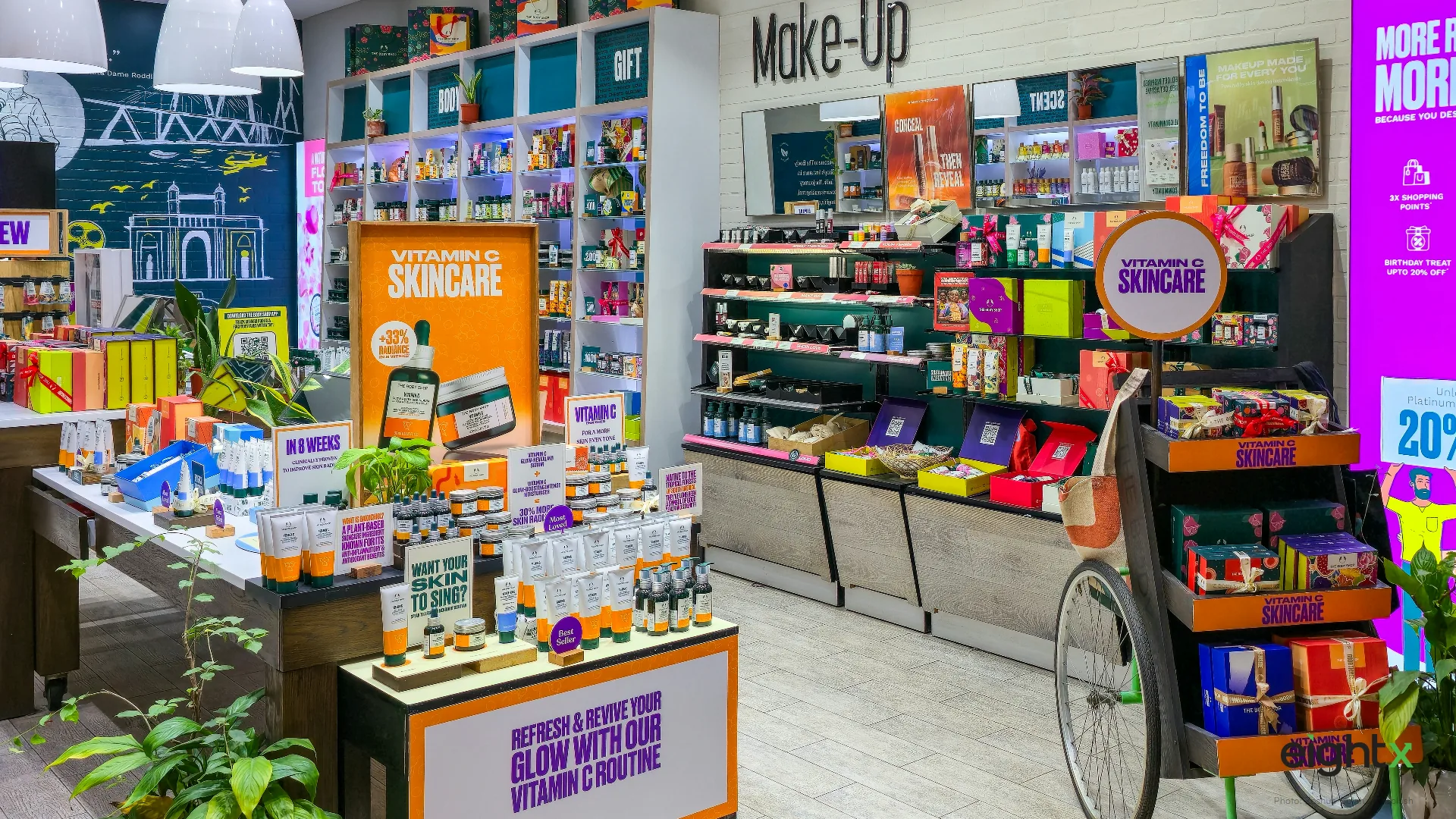
The hybrid discovery pattern, 78% online, 77% valuing in-store equally, means wholesale and retail shelf presence is doing acquisition work, not just fulfillment work. A brand that treats retail purely as a distribution channel and DTC purely as the acquisition engine is missing where a large share of this cohort's trust actually gets built: in-store trial.
That argues for modeling contribution margin across both channels for this cohort specifically, rather than defaulting to a DTC-first playbook. Retail carries lower per-unit margin than DTC, as our DTC-versus-retail margin data shows, but if the shelf is functioning as a CAC channel for a cohort where paid digital barely moves the needle, that margin gap needs to be weighed against what retail actually buys you in trust and trial, not evaluated on unit margin alone.
The upside, and the return-rate risk
There is a genuinely good economic story buried in this data too. If parents, peers and in-store trial are doing most of the acquisition work for free or near-free, a beauty brand that resists the urge to force this cohort into a paid-acquisition model can see a real payback advantage: lower blended CAC, less dependency on rising paid-social costs, and a funnel that scales with trust rather than ad spend.
The catch is on the back end. Kid and teen SKUs, especially ones bought on discovery and in-store trial rather than deep research, carry real risk on returns and shelf life if fit, scent or skin reaction does not match expectations. Track this against the beauty and cosmetics return-rate benchmarks your category already runs, and build a returns reserve into your Gen Alpha SKU margin before you scale distribution, not after a return spike shows up in your gross-to-net line.
What to watch
- Your paid-social CAC assumptions for this cohort. If your model assumes influencer or paid-social spend drives Gen Alpha discovery the way it does for adult buyers, this data says otherwise. Rebuild the channel weighting before you commit next year's beauty youth-line budget.
- Retail and wholesale contribution margin, modeled as an acquisition cost, not just a distribution cost. The shelf is doing real discovery work for this cohort. Price that in.
- Compliance, labeling and packaging spend for age-appropriate SKUs. About a third of parents are asking for this directly. Treat it as a funded cost line, not a nice-to-have.
- AI-driven discovery, currently smaller than parents or peers but growing, particularly among boys, who are adopting AI shopping tools faster than girls in this cohort.
- Return rates on kid and teen SKUs as trial-driven discovery scales into actual purchase volume.
The operator takeaway
The headline out of Ulta's study is that Gen Alpha discovers beauty products differently than the cohorts most CAC models were built for. The number that should reach your P&L is narrower: the channels this generation actually trusts, parents, peers, in-store trial, are not the channels most beauty brands are currently paying to acquire on. That is a channel-mix and funnel-design problem before it is a product problem.
So rebuild the model with two audiences in the funnel instead of one, price the compliance and labeling cost of an age-appropriate assortment into your margin, and weigh retail's acquisition value against its lower unit margin rather than defaulting to DTC-first. Watch your return rate as trial-driven discovery turns into real purchase volume. If you want a second set of eyes on that channel mix and the margin math behind it, our team does exactly this work.
Frequently Asked Questions
what did ulta and nielseniq find about how gen alpha discovers beauty products?
Ulta Beauty partnered with NielsenIQ on a Smart Beauty Study, surveying more than 500 US children and teens ages 8 to 17, plus their parents, in April and May 2026. The headline finding is that parents are the single most influential discovery channel at 55%, ahead of peers at 52% and social media at 51%. In-store trial drove 39% of discovery, while influencers, AI tools, websites and ads each drove under 20%. The data points to a cohort whose buying decisions run through people they trust and products they can touch, not paid media.
why do influencers barely matter for gen alpha beauty shoppers?
In the Smart Beauty Study, influencers were grouped with AI, websites and ads as each driving under 20% of discovery, well behind parents, peers and social media broadly. That does not mean influencer content never gets seen. It means it is not the primary channel converting this age group into buyers. For a beauty brand, that is a signal to stop sizing a CAC forecast around creator spend for this cohort and start modeling the channels that actually carry weight: parental trust, peer recommendation and in-store trial.
what does this mean for a beauty brand's cac model?
It means a paid-social-heavy CAC model misprices this cohort, because the cheap-reach channels here are not ones you buy on a CPM. Parents, peers and in-store trial cannot be bought the way a Meta or TikTok impression can. See our average CAC by marketing channel benchmarks for how paid channels typically price out, then discount that model for a cohort where the paid levers barely move the needle. The acquisition cost here is closer to earned trust and retail presence than to ad spend.
how should a dtc beauty brand split spend between online and in-store channels for this cohort?
The study shows 78% discover products online but 77% also value brick-and-mortar validation about equally, which makes this a hybrid shopper, not an online-only one. A DTC-only channel model undercounts real influence. Retail and wholesale presence functions as a discovery and validation channel here, not just a distribution point, so it belongs in the acquisition math alongside paid and organic digital, weighed against the DTC-versus-retail margin trade-off each channel carries.
are boys as interested in beauty products as girls in this study?
Yes, and the study frames this as a genuinely unique finding. Ulta CMO Kelly Mahoney said feelings about beauty and wellness are almost equal between boys and girls in this cohort. Boys show strong interest specifically in fragrance and hair care, and boys are also earlier adopters of AI shopping tools than girls, who are slower to pick them up. A brand modeling its Gen Alpha buyer as girls-only is underpricing a real second audience with its own product and messaging needs.
how much do gen alpha shoppers use ai tools to discover beauty products?
35% of the surveyed cohort use AI personalization tools and 30% use AI-powered search, with boys adopting these tools faster than girls. That is a meaningful minority, but it still trails parents (55%), peers (52%) and social media (51%) as a discovery channel, and it is well ahead of traditional influencer content. AI discovery is worth tracking and building for, but it is not yet the dominant channel this brief's other findings might suggest, and it should not anchor a beauty brand's near-term CAC plan.
what should a beauty brand change in its assortment or packaging based on this research?
About one-third of parents in the study want age-appropriate assortments, clear labeling and knowledgeable in-store staff. That is a real cost line, not a marketing footnote: it touches packaging and compliance spend, SKU rationalization for a younger shelf set, and staff training budget at retail partners. Brands that treat this as free positioning rather than a funded requirement will underspend on the exact things that build the parental trust this cohort's discovery data says matters most, per the beauty brand unit economics most brands are already working within.