
Financial Strategy
Celsius (CELH) Teardown: Numbers, Model, Bear Case
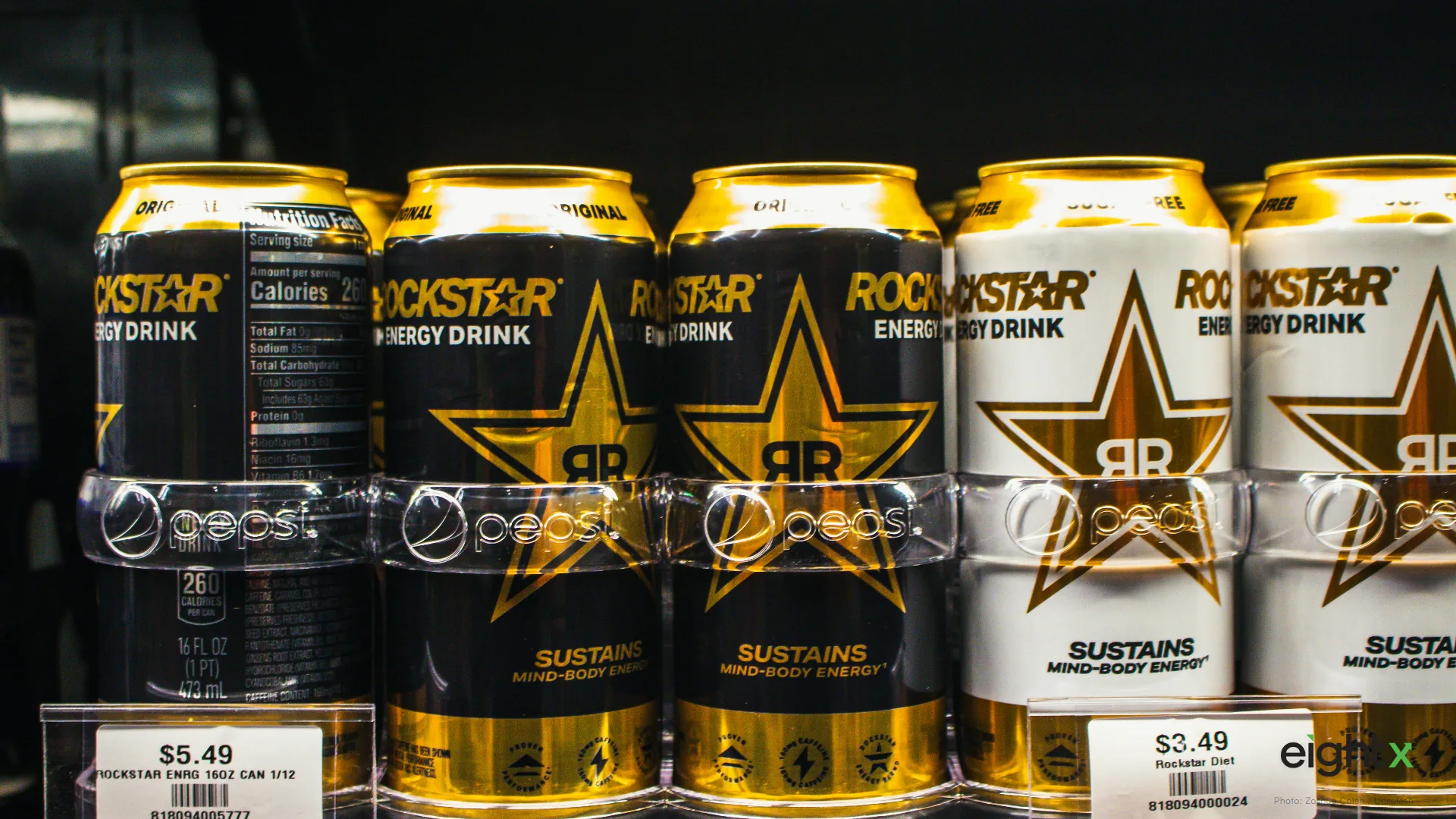
Celsius Holdings (NASDAQ: CELH) owns the CELSIUS, Alani Nu, and Rockstar energy drinks, with FY2025 revenue of $2.515B. But the 2023 doubling was a PepsiCo channel-fill, not organic demand, and FY2025's surge was largely the $1.8B Alani Nu acquisition. PepsiCo now distributes all three brands and holds board seats, a relationship Celsius cannot exit until 2041.
Key Takeaways
- The FY2023 +102% revenue jump was not organic demand: North America revenue grew $645.9M in FY2023 - the year after PepsiCo took over distribution. PepsiCo was 59.4% of net revenue that year and 69.0% of receivables. The 10-K attributed the surge to 'continued gains in distribution points' - that is a channel-fill sentence, not a consumer-demand sentence. Source: CELH 10-K FY2023, Item 7.
- FY2024 showed the hangover: North America grew 1.4%: After the channel-fill cycle, organic growth almost stopped. North America revenue grew only $17.6M in FY2024. Management's own language: 'timing of orders by our largest distributor, Pepsi, along with increased promotional activity negatively impacted revenues.' Promotional allowances hit $455.1M that year - up from $315.2M in FY2023. Source: CELH 10-K FY2024, Item 7.
- The acquisition pivot bought revenue, not growth: Unable to grow organically, Celsius paid about $1.8B ($1.275B in cash plus stock) for Alani Nu (closed April 2025) and acquired Rockstar from Pepsi (August 2025). Alani Nu contributed ~$1.0B of FY2025 revenue, 'including initial inventory purchases by Pepsi in connection with the transition to its distribution network' - that phrase is the channel-fill disclosure, verbatim from the FY2025 10-K MD&A. Source: CELH 10-K FY2025, Item 7.
- Operating margin collapsed to 5.6% despite near-doubling revenue: The $327.5M in distributor termination fees paid in FY2025 to transition Alani Nu's distribution to Pepsi crushed reported operating income to $141.1M (5.6% margin) from $155.7M (11.5%) on a revenue base that nearly doubled. EPS (diluted) fell from $0.45 in FY2024 to $0.25 in FY2025. Source: CELH 10-K FY2025, income statement.
- PepsiCo dependency is now existential and contractually locked: After the August 2025 Amended and Restated Distribution Agreements, Pepsi distributes all three brands in the U.S. and Canada, holds two board seats, holds both Series A and Series B Preferred Stock, and the first exit window is 2041 (year 19 of the A&R agreement, with 12-month notice). The FY2025 10-K added a new risk factor titled 'Pepsi's increased ownership stake and additional Board representation may allow it to exert greater influence over our strategic and governance decisions.' Source: CELH 10-K FY2025, Item 1 and Item 1A.
$654 million of revenue in FY2022. Then a PepsiCo distribution deal, and $1.318 billion in FY2023 - a 102% jump in twelve months. Then $1.356 billion in FY2024, growing 2.9%, with North America growing 1.4%. Then two acquisitions, $900 million of new term-loan debt, and $2.515 billion in FY2025 - but with $327.5 million of one-time distributor termination fees, a partner that controls all three brands' distribution, and a contractual relationship the company cannot exit until 2041.
That trajectory is the Celsius story. The question is not whether the revenue numbers are real. It is whether the growth was earned, or whether it was bought - first by a distribution takeover that inflated channel inventory, and then by acquisitions that repeated the cycle.
This is a CFO's teardown of that story.
Section 1 - The snapshot
| Metric | FY2023 (the rocket) | FY2024 (the hangover) | FY2025 (the pivot) | Q1 2026 (the run-rate) |
|---|---|---|---|---|
| Revenue | $1,318.0M | $1,355.6M | $2,515.3M | $782.6M |
| Revenue YoY | +101.7% | +2.9% | +85.5% | +137.7% |
| North America YoY | +105.0% | +1.4% | +89.1% | +143.8% |
| Gross margin | 48.0% | 50.2% | 50.4% | 48.3% |
| Operating income (margin) | $266.4M (20.2%) | $155.7M (11.5%) | $141.1M (5.6%) | $139.0M (17.8%) |
| Net income | $182.0M | $107.5M | $108.0M | $110.1M (consol.) |
| Diluted EPS | $0.77 | $0.45 | $0.25 | $0.33 |
| Distributor termination fees | - | - | $327.5M | $4.4M |
| Promotional allowances | $315.2M | $455.1M | Not separately disclosed | - |
| PepsiCo % of net revenue | 59.4% | 54.7% | 43.2% | ~59.0% (Q1 2026) |
| Cash | $756.0M | $890.2M | $398.9M | $549.2M |
| Net debt | Net cash | Net cash ($890.2M) | $299.4M | ~$147M |
The five-year arc:
| Fiscal year | Revenue | YoY growth | Gross margin | Operating margin | Net income | Diluted EPS |
|---|---|---|---|---|---|---|
| FY2022 | $653.6M | n/a (base year) | 41.4% | -24.1% | Net loss | -$0.88 |
| FY2023 | $1,318.0M | +101.7% | 48.0% | +20.2% | $182.0M | $0.77 |
| FY2024 | $1,355.6M | +2.9% | 50.2% | +11.5% | $107.5M | $0.45 |
| FY2025 | $2,515.3M | +85.5% | 50.4% | +5.6% | $108.0M | $0.25 |
| Q1 FY2026 | $782.6M (qtr) | +137.7% | 48.3% | +17.8% | $110.1M (qtr, consol.) | $0.33 |
Section 2 - The business model: how they actually make money
Celsius Holdings sells caffeinated energy drinks. That sentence matters more than it sounds, because the company's own framing - "functional beverage," "wellness-focused," "active lifestyle" - can obscure a straightforward commodity-adjacent manufacturing and distribution model.
The core product is the CELSIUS RTD (ready-to-drink) can: a zero-sugar, caffeinated energy drink with the "MetaPlus" proprietary blend of green tea extract, guarana, ginger, B vitamins, and chromium. The functional claim - "clinically proven to accelerate your metabolism" - is the marketing backbone. As of FY2025, the portfolio is three brands: CELSIUS (wellness-positioned, launched 2008), Alani Nu (acquired April 2025, Gen Z and female-skewing), and Rockstar (acquired August 2025 from PepsiCo, traditional full-sugar and zero-sugar energy).
The manufacturing model is hybrid: Celsius outsources production primarily to third-party co-packers. In November 2024, it acquired Big Beverages - a longtime co-packer - for $75.3M, giving it its first meaningful owned production capacity (168,480 sq ft manufacturing + 123,830 sq ft warehouse). That acquisition is the only meaningful owned production asset; the majority of volume is still co-packed.
The channel model is DSD (direct store delivery), and the DSD partner is PepsiCo. Sales channels include conventional grocery, natural-food stores, convenience stores, fitness centers, mass-market retailers, vitamin specialty retailers, and e-commerce platforms including Amazon, Shopify, Instacart, and Walmart.com. No DTC-vs-wholesale revenue split is publicly disclosed. What is disclosed is the Pepsi share: 43.2% of FY2025 net revenue ran through PepsiCo, and 46.2% of total receivables at year-end were Pepsi receivables.
Where does the 50% gross margin come from? The spread between the wholesale sell-in price Celsius receives from Pepsi and its co-packer cost of goods - aluminum cans, concentrates, liquid bases, flavors, packaging, inbound freight, and warehousing. The COGS line includes co-packing fees, repacking fees, inbound and outbound freight, and warehouse costs. What is not captured in the COGS line, but is deducted from gross revenue before you see the "net revenue" figure, is promotional allowances: $315.2M in FY2023 and $455.1M in FY2024, before the FY2025 10-K ceased disclosing the standalone figure. Those allowances are the cost of Pepsi's distribution infrastructure, booked as a reduction of revenue.
Here is what the "is Celsius healthy?" conversation looks like on the consumer side. These videos are social and sentiment signals, not load-bearing financial facts - but they are the risk layer that a health-claim-dependent brand needs to monitor.
@insulinresistant1 Celsius energy drink and my blood sugar. How does it affect my glucose levels? #bloodsugar #glucoselevels #insulinresistant1 #celsiusenergy
♬ original sound - Justin / Stop Spiking Sugar
@insulinresistant1 (Justin / Stop Spiking Sugar), 1.1M plays, 25.2K likes. Health-focused consumer scrutinizing glucose impact - the same "wellness" positioning CELH markets is what draws this scrutiny. Social signal only.
@doctorsood Energy drinks like Celsius contain caffeine, taurine, and guarana, which can raise heart rate and blood pressure. In people with heart rhythm problems or genetic heart diseases, these stimulants can trigger arrhythmias or even cardiac arrest. The long-term effects on heart disease are still unclear, but experts advise caution and moderation. VC: @holistickaboushi Follow @doctorsoood to improve your health IQ and for similar content. PMID: 29225735, 38842964 #energydrinks #hearthealth #cardiology #caffeine #medical #health
♬ original sound - DoctorSood, M.D.
@doctorsood (DoctorSood, M.D.), 556.7K plays, 10.2K likes, 402 comments. Medical professional flagging heart-risk considerations in energy drinks by name. The same brand awareness that drives Celsius into health-conscious gym bags is also what puts it at the center of this scrutiny. Social signal only.
@samgamezz Celsius Energy Drinks - Warning #celsius #celsiusenergy #celsiusenergydrink #energydrinks #preworkout #gymgirls #fitnesstips
♬ Hip Hop with impressive piano sound(793766) - Dusty Sky
@samgamezz (Samantha Gamez), 788.6K plays, 11.1K likes. Fitness-audience "warning" video - the consumer segment Celsius targets most aggressively is also the segment most attuned to ingredient skepticism. Social signal only.
Returns are quietly eating your margin. See by how much.
Get our Real Cost of Returns calculator: plug in your numbers, see the true hit per return.
Check your inbox. We'll send the Real Cost of Returns calculator shortly.
Section 3 - Strengths: the moat that is real
1. Gross margin that is structurally strong and has been stable. CELH has held gross margin at or above 50% for two consecutive fiscal years (50.2% in FY2024, 50.4% in FY2025) and at 48.3% in Q1 2026 despite absorbing Alani Nu and Rockstar at lower-margin mix. For context, Monster Beverage (MNST) reported 55.0% gross margin in Q1 2026 - Celsius runs approximately 670 basis points below that benchmark, but is well above commodity beverage economics. The 50% gross margin is what the CELSIUS premium pricing earns over a co-packer cost structure. Source: CELH 10-K FY2025; MNST Q1 2026 results (May 8, 2026).
2. Multi-brand portfolio with genuine demographic reach. The three-brand architecture covers materially different consumers: CELSIUS targets active, wellness-oriented adults; Alani Nu targets Gen Z and female health-focused consumers; Rockstar targets traditional energy-drink buyers. Alani Nu surpassed $1.0B in retail sales for the 52-week period ended April 13, 2025, growing 72.4% YoY before the acquisition closed. That revenue base was real before Celsius bought it. Combined, the portfolio contributed approximately 33% of the zero-sugar U.S. energy category's $3.3B of growth in 2025, and Celsius described itself as approximately 1 in every 5 energy drinks purchased in the U.S. Source: Alani Nu $1B retail sales press release (Celsius IR, April 2025); Q1 2026 investor presentation, May 7, 2026.
3. The PepsiCo distribution infrastructure is genuinely hard to replicate. Whatever the dependency risks - which are real and discussed below - the access to Pepsi's DSD network across the U.S. and Canada is a distribution asset that took years and $542M of preferred-stock consideration to secure. Monster Beverage built its comparable infrastructure through Coca-Cola over decades. Celsius effectively bought its way into DSD scale in three years. In Q1 2026, total U.S. tracked retail sales grew 29.8% portfolio-wide. The distribution rails are working in the sense that product is reaching shelf. Source: CELH 10-K FY2023 (Pepsi deal terms); Q1 2026 earnings release, May 7, 2026.
4. Adjusted EBITDA generation is genuinely strong when one-time charges are stripped. FY2025 Adjusted EBITDA (non-GAAP, excluding the $327.5M distributor termination fees, acquisition/integration costs, and inventory step-up) was $619.6M at a 24.6% margin, more than double FY2024's $255.7M. Cash from operations was $359.4M in FY2025 and $262.9M in FY2024. The underlying cash generation is real, and it funded the Alani Nu debt paydown (from $900M to $677M within the year). Source: CELH FY2025 earnings release, February 26, 2026; XBRL operating cash flow data.
Section 4 - Weaknesses: the cracks in the 10-Q
1. The FY2023 revenue surge was a channel-fill event, not proven consumer demand. This is the foundational crack in the story. When PepsiCo took over U.S. DSD distribution in August 2022, it built initial inventory across its network - the standard mechanics of any DSD distribution transition. North America revenue grew $645.9M (105%) in FY2023. PepsiCo's share of that revenue was 59.4%. The 10-K's own MD&A attribute the growth to "continued gains in distribution points and SKUs per location" - that is distribution-point language, not consumer-demand language. What happened in FY2024 confirms the read: North America grew $17.6M (1.4%) as Pepsi digested its inventory. The company's own words from the FY2024 10-K MD&A: "Slower industry-wide growth within the energy drink sector tempered our performance. Additionally, timing of orders by our largest distributor, Pepsi, along with increased promotional activity negatively impacted revenues compared to 2023." Source: CELH 10-K FY2023 and FY2024, Item 7 MD&A.
2. Promotional allowances are a structural margin drain that the headline gross margin obscures. Net revenue at Celsius is stated after promotional allowances are deducted. In FY2024, those allowances were $455.1M - 33.6% of reported net revenue. In FY2023, $315.2M. In FY2022, $158.5M. The trend line is unambiguous: every year Pepsi distributes Celsius, the promotional allowances grow. Amendment No. 1 to the distribution agreement (March 2024) introduced an explicit "incentive program to incentivize and compensate Pepsi for its continued focus on and actions to support the Company" - accounted for as promotional allowances reducing reported revenue. The 50% reported gross margin is real on the $2.5B of net revenue. But the economics of getting that $2.5B to the shelf cost $455M+ that does not appear in COGS. Source: CELH 10-K FY2024, Note 4 and Item 7; 10-K FY2023 promotional allowance disclosures.
3. PepsiCo dependency is existential, contractually locked, and deepening. Pepsi's share of net revenue was 59.4% in FY2023, 54.7% in FY2024, and 43.2% in FY2025 - a declining percentage. But the percentage decline is dilution effect from adding $1.0B of Alani Nu revenue and $55.6M of Rockstar revenue to the base, not reduced operational reliance. After the August 2025 Amended and Restated Distribution Agreements, PepsiCo distributes all three brands. Pepsi has two board seats. Pepsi holds Series A and Series B Convertible Preferred Stock. And the first exit window is 2041, per Item 1 of the FY2025 10-K: "the initial term of the A&R U.S. Distribution Agreement runs through the 19th anniversary of the effective date of the original U.S. Distribution Agreement, and may be terminated upon 12 months' written notice beginning on such 19th anniversary and at each successive 10-year anniversary thereafter." The FY2025 10-K itself added a new top-five risk factor for FY2025 that did not appear in FY2024: "Pepsi's increased ownership stake and additional Board representation may allow it to exert greater influence over our strategic and governance decisions." Source: CELH 10-K FY2025, Item 1 and Item 1A risk factor block.
4. Alani Nu's FY2025 revenue included channel-fill, and the CELSIUS brand grew only 6% in Q1 2026. The FY2025 10-K MD&A is direct: the North America revenue increase "was driven primarily by the Alani Nu Acquisition, which contributed approximately $1,001.9 million. This contribution included initial inventory purchases by Pepsi in connection with the transition to its distribution network." That is the same channel-fill mechanics that produced the FY2023 CELSIUS spike, now playing out on Alani Nu. In Q1 2026 tracked retail data, CELSIUS brand grew approximately 6%, Alani Nu grew approximately 100% (first full post-close quarter), and Rockstar declined approximately 13%. Annualizing Q1 2026 revenue projects to approximately $3.1B - but the organic CELSIUS brand that was the original thesis is now a single-digit growth brand. Source: CELH 10-K FY2025, Item 7 verbatim quote; Q1 2026 earnings release, May 7, 2026 (stocktitan.net).
5. The securities class actions allege the growth story was misrepresented. Two putative securities class actions were filed in November 2024 and January 2025, covering a class period from February 29, 2024 (day of the FY2023 annual results) through September 4, 2024 (day after Q2 2024 results). The complaints allege "false and misleading statements or omissions concerning the Company's distribution agreement with Pepsi and the Company's growth." The class period starts precisely when the FY2023 results were released, and ends when the FY2024 deceleration became visible in the quarterly results. Additionally, in January 2025, Celsius settled a separate SEC investigation for a $3.0M civil penalty for "alleged reporting, books-and-records, and internal controls violations" - an inquiry that began in 2021. The class actions are unresolved allegations; the SEC settlement is a concluded fact. Source: CELH 10-K FY2024, Note 15; 10-K FY2025 Notable Events section.
Section 5 - Opportunities and threats
The opportunity set is real but structurally narrow because the distribution architecture has already been built.
International expansion is the clearest organic growth lever left. FY2025 international revenue was $92.8M - 3.7% of total - growing 17.6% YoY. Celsius has established Suntory distribution partnerships in the UK/Ireland, Australia/NZ, France/Monaco, and Benelux; added the Netherlands in May 2025. The international segment is small enough that doubling it is a meaningful story without requiring the brand to solve for incremental shelf velocity in the already-saturated North American market. Europe and Asia-Pacific are under-indexed for a brand this size.
The better-for-you category tailwind is structural. Alani Nu's 72.4% retail sales growth in the 52 weeks before acquisition and Celsius's claimed contribution to 33% of zero-sugar energy category growth both point to a demographic shift that has years of runway. Gen Z and female consumers trading into functional beverages are a durable trend, not a fad.
The threat layer is where the pressure concentrates. The most direct threat is the one the company already lives with: any disruption in the PepsiCo relationship. PepsiCo's DSD network is also the distribution home for Pepsi-Cola, Gatorade, Mountain Dew, and other major brands; if PepsiCo's priorities shift, shelf velocity for CELSIUS or Alani Nu changes before Celsius management can respond. The 17-year contractual lock also means Celsius cannot seek a better distribution arrangement even if it wanted to.
The regulatory threat is brand-specific: the "clinically proven to accelerate your metabolism" claim on CELSIUS packaging is a structure/function claim under FDA guidelines. As regulators scrutinize energy drink health claims more broadly, the functional claim that built the CELSIUS premium position is a potential liability. The TikTok medical-professional content (Section 2) signals this scrutiny is already active in the consumer culture.
Input-cost exposure is real: aluminum cans, concentrate, flavors, and packaging are the COGS structure. The FY2025 10-K added a new tariff risk factor. Freight-on-goods costs were approximately $50.7M in FY2024, with additional freight-out costs of $224.2M. Aluminum and packaging tariff exposure is brand-specific and not hedged through long-term supply contracts in any manner disclosed in the filings.
Section 6 - The macro environment
Celsius is navigating three macro forces simultaneously, and the one that matters most is internal, not external.
The functional-beverage category tailwind is the genuine long-run positive. The U.S. energy drink market has grown for a decade, zero-sugar and "better-for-you" energy has grown faster than the overall category, and both Celsius and Alani Nu are positioned in the fastest-growing segments. Red Bull saw net sales rise 8.6% to approximately $14.3B in 2025. Monster Beverage grew in its Q1 2026. The category itself is not in trouble.
The consumer-spending pressure is real but not CELH-specific. Energy drinks are not discretionary in the same way that apparel or furniture are; the $2.00-$3.00 RTD price point has historically been relatively recession-resistant. The risk is premiumization fatigue: if the category ceiling on functional-claim pricing is lower than where Celsius has priced, the promotional allowance pressure increases.
The channel-consolidation dynamic is the macro force most specific to CELH. As large-format retail and convenience continue to consolidate, the negotiating position of a single DSD distributor (Pepsi) over shelf space, cooler placement, and promotional calendar grows. Celsius is not on the wrong side of DSD consolidation - it is aligned with the largest DSD network in North America. But that alignment is also the lock: if Pepsi renegotiates terms, Celsius cannot credibly threaten to leave.
The tariff environment added new exposure in FY2025. Aluminum cans are primarily sourced domestically but packaging and input materials carry international sourcing exposure. The FY2025 10-K flagged tariffs as a new dedicated risk for the first time. The Big Beverages acquisition (owned co-packing) and the Dublin international hub are modest steps toward supply-chain optionality, but the volume is still predominantly third-party co-packed.
As we discussed in our Hims & Hers teardown, the macro test for a single-channel-dependent brand is what happens when the channel's interests diverge from the brand's. For HIMS, the channel was pharmacy compounding; for CELH, the channel is Pepsi's DSD network. The macro environment does not create that risk - the agreement structure did.
Section 7 - The CFO verdict and the operator bridge
Here is the read on Celsius Holdings from a CFO's vantage point.
The gross margin is real. A 50%+ gross margin on a manufactured beverage, held across two full fiscal years and into a quarter where mix shifted toward lower-margin acquired brands, is structural. The MetaPlus formula and the premium positioning earn it. The co-packer cost structure is efficient. That part of the business model works.
The growth story does not hold up the same way. The +102% FY2023 revenue surge was mechanically produced by a DSD distribution takeover - the same event that paid prior distributors $181M to exit territory, funded by PepsiCo's $542M preferred-stock injection. FY2024's 1.4% North America growth was the organic demand signal underneath the channel-fill, and it was weak. The company's response - buying Alani Nu for about $1.8B, taking on $677M of term-loan debt, and running the same channel-fill cycle again through Pepsi's DSD network - produced another FY2025 revenue surge. The FY2025 10-K's own disclosure told you what it was: "initial inventory purchases by Pepsi in connection with the transition to its distribution network." That sentence is the story.
The dependency risk is the one that I think is underappreciated in how Celsius is discussed externally. The question is not "does Pepsi distribute well?" Pepsi distributes extremely well. The question is "what happens to Celsius's negotiating position when the distribution agreement comes up for review?" The answer from the filings is: the first review window is 2041. Between now and 2041, Pepsi distributes all three brands, holds board seats, holds preferred equity, and receives promotional allowances of hundreds of millions of dollars per year. There is no credible outside option for Celsius to exercise. That is not a typical vendor relationship - it is a structural dependency the company cannot exit on any commercially viable timeline.
The securities class actions add an overhang. The class period (February 29, 2024 to September 4, 2024) maps precisely to the FY2023 annual results press release through the Q2 2024 earnings when the deceleration became undeniable. That timing is not coincidental. The claims remain unresolved allegations. But the litigation represents management bandwidth, legal cost, and the possibility of settlement that would further compress earnings - against a backdrop where diluted EPS has already fallen from $0.77 (FY2023) to $0.25 (FY2025) on an 85% revenue increase.
For a comparison with a brand whose weakness also lives in distributor-adjacent concentration, see our Vital Farms teardown - the pattern of distribution-layer dependency eroding headline margin plays differently in CPG versus beverages, but the structural tell (where is your pricing power really coming from, and who actually controls the shelf?) is the same.
The operator bridge. Your $5-80M brand very likely has a version of the Celsius pattern in miniature - smaller in magnitude, but structurally the same. The tell is this: a single distribution event (a major retail account, an Amazon lightning deal, a wholesale pickup) produced a revenue spike that your team then presented as traction. And then the repeat rate did not materialize at the same level, and the question became "what happened?"
What happened is the same thing that happened to CELH's FY2024: the channel filled, and then the channel held. The organic demand was always smaller than the spike. I have seen this in client work where a brand's first large-format retail authorization - Costco, Target, a major regional grocery chain - produced a revenue pop that looked like breakthrough growth. It was breakthrough distribution. The demand underneath it was real but a fraction of the fill volume.
The early warning in your numbers appears 6-9 months before it is visible in revenue. You can see it in sell-through velocity (does the retailer reorder at the original cadence?), in promotional allowance as a percentage of gross revenue (is it growing faster than your volume?), and in accounts receivable days (is your major customer paying more slowly because they are sitting on excess inventory?).
Early-warning scorecard - five lines that catch this 12 months early:
- Sell-through vs. sell-in gap: If your major distributor or retailer is ordering at high volume but your velocity-per-store is flat or declining, you are filling, not growing. Track units-per-store-per-week from syndicated data or retailer portals - that is your demand signal, not your invoice to the distributor.
- Promotional allowances as a percentage of gross revenue: If this percentage is growing year-over-year - even while net revenue grows - the cost of holding shelf is increasing faster than the volume it generates. Celsius's allowances grew from $158.5M (FY2022) to $315.2M (FY2023) to $455.1M (FY2024) while revenue also grew. That trend compounds.
- Revenue concentration in top one or two accounts: If a single customer represents more than 40% of your revenue and 50% of your receivables, their inventory decisions drive your quarterly results more than your marketing does. Know this number before your next investor conversation or bank covenant review.
- Accounts receivable days outstanding relative to prior year: When a major customer is working through inventory, they pay slower. AR days expansion is frequently the first signal that channel inventory is high. CELH's AR moved from $63.3M (FY2022) to $183.7M (FY2023) to $270.3M (FY2024) to $755.5M (FY2025) - that last jump is almost entirely Alani Nu, but the directional read is instructive.
- Operating cash flow relative to net income: When these two diverge significantly - OCF falling while net income holds steady - working capital (usually inventory or AR) is absorbing the business. In FY2024, CELH's operating cash flow of $262.9M against net income of $107.5M showed the opposite direction (OCF above net income due to non-cash items), but the underlying dynamic to watch is whether FCF is being used to build channel inventory that has not yet been demanded.
If you want to run this scorecard against your own numbers before your own FY2024 moment arrives, that is a fractional CFO conversation. The analysis takes a few hours. The cost of not doing it typically shows up in the quarter after the channel corrects.
Related reading. For how a DTC-native beverage brand runs the same P&L, see our Olipop teardown.
Sources and methodology
SEC EDGAR is the primary source for every financial figure in this post. Celsius Holdings, Inc. (CIK 0001341766) files on SEC EDGAR under the 10-K and 10-Q form types. The specific filings used: 10-K FY2025 (filed 2026-03-02, accession 0001341766-26-000024); 10-Q Q1 2026 (filed 2026-05-07, accession 0001341766-26-000039); 10-K FY2024 (filed 2025-03-03, accession 0001341766-25-000024); 10-K FY2023 (filed 2024-02-29, accession 0001341766-24-000015). Revenue, gross margin, operating income, net income, SG&A, promotional allowances, distributor termination fees, inventory, cash, and all balance sheet figures are taken from XBRL financial statements and MD&A sections in these filings. Quarterly figures are from the 10-Q filings for Q2 2024, Q3 2024, Q1-Q3 2025, and Q1 2026 as returned by SEC EDGAR (pulled 2026-06-23).
The EDGAR data spine (CIK 0001341766, pulled 2026-06-23) confirms FY2022 revenue of $653.6M, FY2023 of $1,318.0M (+101.7%), FY2024 of $1,355.6M (+2.9%), FY2025 of $2,515.3M (+85.5%), and Q1 2026 of $782.6M. The FY2022 operating loss of -$157.8M (operating margin -24.1%) was driven by approximately $181M in distributor termination fees paid to clear territory for PepsiCo - confirmed in the FY2022 disclosures.
The 10-K arc (from reading the three annual 10-Ks directly on SEC EDGAR) provided verbatim quotes, promotional allowance detail, PepsiCo concentration percentages by year, and the narrative arc of the PepsiCo distribution deal structure including the cancellation window timeline.
Published analyst and industry research provided the competitive context (Monster Beverage gross margin of 55.0% in Q1 2026, from Monster Q1 2026 results dated May 8, 2026), the Alani Nu retail sales figures ($1.0B for 52 weeks ended April 13, 2025, 72.4% YoY - from Celsius IR press release April 2025), the Q1 2026 brand-level retail growth splits (CELSIUS +6%, Alani Nu +100%, Rockstar -13% - from Q1 2026 earnings release May 7, 2026 via stocktitan), and the Adjusted EBITDA reconciliation ($619.6M FY2025 - from FY2025 earnings release, February 26, 2026). Where those claims could not be reconciled to a primary filing, they were excluded or flagged.
The securities class action disclosures are sourced to the CELH 10-K FY2024, Note 15, which names the class period (February 29, 2024 through September 4, 2024) and the nature of the allegations. The SEC settlement ($3.0M civil penalty, January 17, 2025) is sourced to the Notable Events section of the FY2025 10-K. These are public record; the class actions remain unresolved.
Social signal is colour only. The three TikTok embeds in Section 2 are from the energy drink category and carry no financial claim. @insulinresistant1 (1.1M plays, 25.2K likes), @doctorsood (556.7K plays, 10.2K likes), and @samgamezz (788.6K plays, 11.1K likes) were selected as illustrative of the health-claim scrutiny the Celsius brand faces in its target consumer segment. They are not evidence of any revenue or margin figure.
Limitations. Celsius does not disclose DTC-vs-wholesale revenue split; only geography (North America vs International) and brand (CELSIUS / Alani Nu / Rockstar) are publicly disaggregated. The FY2025 promotional allowances figure was not separately disclosed in the FY2025 10-K (FY2024 was the last year this figure appeared at $455.1M); the estimate of "not separately disclosed" reflects this limitation. The Alani Nu integration is ongoing; FY2026 will be the first full year with a clean year-over-year comparison. The securities class actions are unresolved. FY2021 revenue was not returned by the SEC EDGAR income-statement data and is omitted from this analysis. This post reflects filings and disclosures current through June 23, 2026.
Frequently asked questions
is celsius holdings profitable?
Celsius Holdings reported FY2025 GAAP net income of $108.0M on $2,515.3M revenue - technically profitable, but diluted EPS fell from $0.45 (FY2024) to $0.25 (FY2025) despite revenue nearly doubling. The compression came from $327.5M in one-time distributor termination fees and approximately $49.0M of net interest expense on the new term loan. On an Adjusted EBITDA basis (non-GAAP), FY2025 was $619.6M at a 24.6% margin, more than double FY2024's $255.7M.
why did celsius holdings' revenue jump in 2023?
Celsius signed a long-term distribution agreement with PepsiCo in August 2022. The year following a major DSD distribution takeover always produces a revenue surge because the new distributor builds initial inventory across its network. North America grew $645.9M in FY2023 - 105% YoY. PepsiCo was 59.4% of that revenue. The 10-K attributed it to "continued gains in distribution points" - a distribution-point sentence, not a consumer-demand sentence.
what happened to celsius holdings in 2024?
After the FY2023 channel-fill surge, organic growth almost stopped. North America revenue grew only $17.6M (1.4%) in FY2024. Management disclosed that "timing of orders by our largest distributor, Pepsi, along with increased promotional activity negatively impacted revenues." Net income fell 41% from $182M to $107.5M, and two securities class actions were filed alleging the company had misrepresented its PepsiCo growth trajectory.
why did celsius buy alani nu?
Celsius could not grow the CELSIUS brand organically at the rate investors expected after the FY2023 channel-fill spike. Alani Nu gave Celsius a second growth engine targeting Gen Z and female consumers. The acquisition closed April 1, 2025, for $1.275B cash plus 22.45M shares plus up to $25M contingent. It was funded with $900M of term-loan debt. Alani Nu's FY2025 revenue contribution (~$1.0B) itself included "initial inventory purchases by Pepsi in connection with the transition to its distribution network" - the same channel-fill mechanics repeating.
what is celsius holdings' relationship with pepsico?
PepsiCo is Celsius's primary distributor for all three brands in the U.S. and Canada under an Amended and Restated Distribution Agreement signed August 28, 2025, with a 17-year term. The first exit window is 2041. PepsiCo holds Series A and Series B Convertible Preferred Stock, has two board seats, and accounted for 43.2% of FY2025 net revenue. The FY2025 10-K added a new risk factor: "Pepsi's increased ownership stake and additional Board representation may allow it to exert greater influence over our strategic and governance decisions."
does celsius holdings have debt?
Yes. The company went from $890.2M net cash at year-end FY2024 to $299.4M net debt at year-end FY2025, following the $900M term loan drawn to fund the Alani Nu acquisition. The loan was refinanced in October 2025 to $700M at a lower rate, with $197.8M paid down. Outstanding balance at December 31, 2025: $676.9M ($698.3M face value), maturing 2032. At Q1 2026, cash had rebounded to $549.2M, reducing net debt to approximately $147M.
what are the celsius holdings securities class actions?
Two putative class actions were filed in November 2024 and January 2025 covering shareholders who purchased between February 29, 2024 and September 4, 2024. The complaints allege false and misleading statements about the distribution agreement with Pepsi and the company's growth. The class period begins the day of the FY2023 annual results and ends the day after Q2 2024 results when the North America deceleration was visible. These are unresolved allegations. A separate SEC investigation was settled for $3.0M in January 2025.
how does the celh gross margin compare to monster beverage?
Celsius FY2025 gross margin was 50.4%, stepping down to 48.3% in Q1 2026. Monster Beverage reported 55.0% gross margin in Q1 2026. That approximately 670 basis-point gap reflects Monster's longer-established brand pricing power and Coca-Cola distribution infrastructure. Celsius's gross margin is genuinely strong for a challenger brand but runs below the Monster benchmark, and the promotional allowances deducted before the net revenue line partially offset the headline figure.