
Pricing
Dynamic and Tiered Pricing for Ecommerce: The Margin Upside Without Breaking Brand Trust
Dynamic pricing moves one product's price over time with demand, inventory, and competitor signals. Tiered pricing sells good-better-best levels at once. McKinsey puts dynamic pricing at 5 to 10 margin points and 2 to 5 percent sales growth, but 66 percent of Americans oppose personalized pricing, so guardrails matter.
Key Takeaways
- McKinsey's own practice pages put dynamic pricing at 5 to 10 margin points and 2 to 5 percent sales growth, but the figures are vendor-reported, not peer-reviewed.
- Tiered good-better-best pricing works by moving willingness-to-pay buyers up, not by discounting down. Simon-Kucher reports well-structured tiers lift ARPU about 43 percent versus flat pricing.
- The biggest risk is trust, not regulation: 66 percent of Americans oppose personalized pricing (47 percent strongly), per a 2024 Consumer Reports survey, and the FTC has an open surveillance-pricing study.
- Every point you add to your average discount depth costs roughly 1.7 points of contribution at a 60 percent gross margin. Dynamic pricing should stop over-discounting, not start it.
- Never run dynamic pricing without a hard floor price and a margin guard. The downside of an unguarded repricer is a race to the bottom across your whole catalog.
Pricing is the fastest lever you own. You can move it tomorrow, it costs nothing to change, and a single point of margin drops straight to the bottom line. So it is strange how many DTC brands treat price as a fixed decision made once at launch and then only ever revised downward through discounts. Dynamic and tiered pricing are the two structured ways to do the opposite: capture more of what your product is worth, in more situations, without permanently marking it down.
But both come with a trap. Done well, McKinsey's own dynamic-pricing practice pages put the margin gain near 5 to 10 points. Done carelessly, they train your customers to distrust your prices, which is the one thing a brand cannot afford. This is a guide to which one fits your business, what it earns, and the guardrails that keep it from backfiring. For the broader picture, see our guide on how to raise prices without losing customers.
Dynamic vs tiered: two different tools
Dynamic pricing changes one product's price over time based on signals: demand, inventory level, competitor moves, seasonality. The airline and hotel model, applied to a Shopify catalog. Tiered pricing offers several prices at once, separated by quantity (volume tiers), by feature set (good-better-best), or by who is buying (segment pricing). Dynamic is a clock that ticks the price up and down; tiered is a menu the customer chooses from.
Most brands under $20M should master tiered pricing first. It is lower risk, the customer sees the logic, and it does not require a real-time data pipeline. Dynamic pricing is more powerful and more dangerous, and it earns its place only once you have the data infrastructure and the volume to justify it.
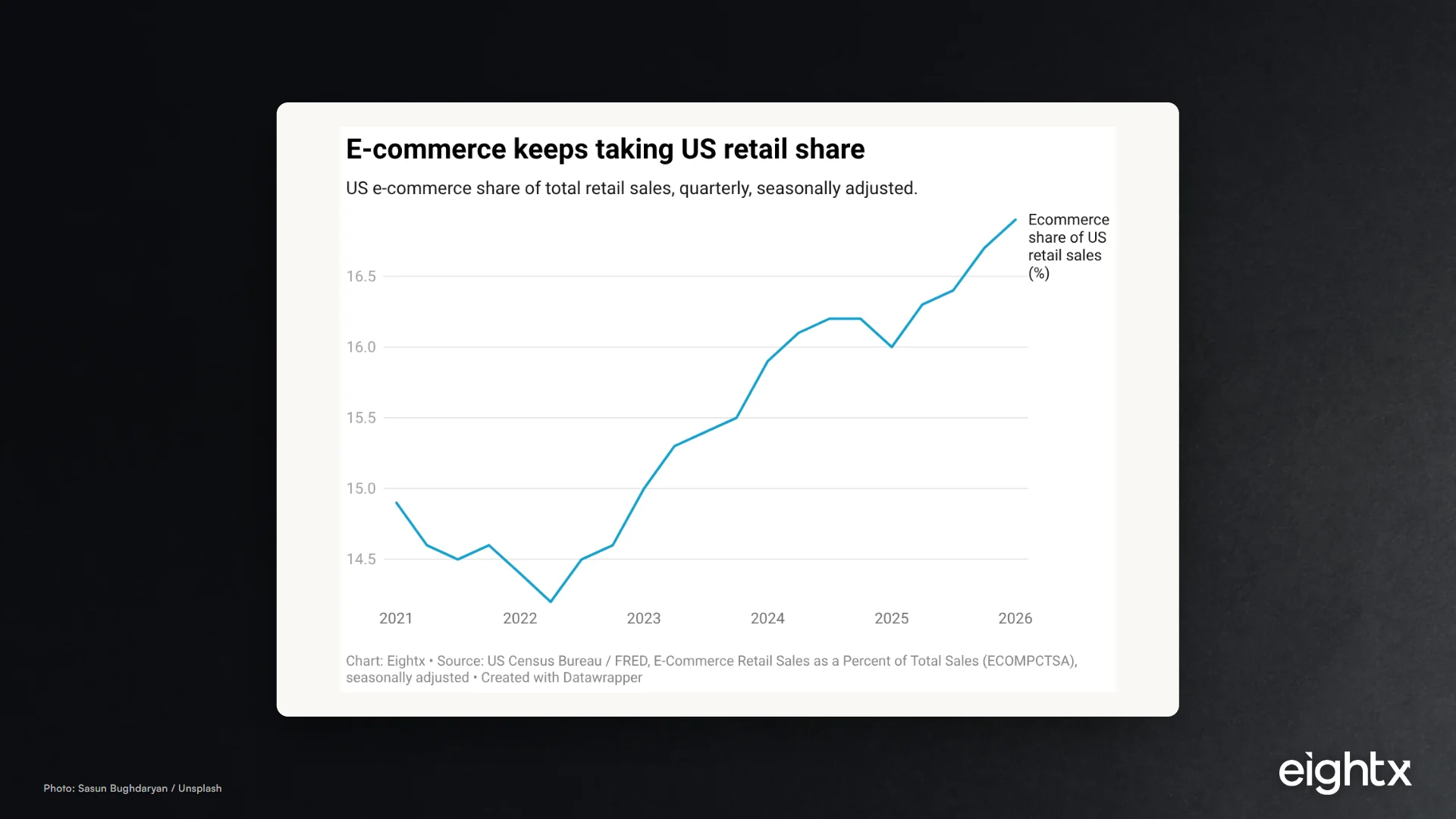
It matters that the channel is still growing. US e-commerce hit 16.9% of total retail sales in early 2026, up from 14.4% in early 2022, so the volume that pricing automation operates on keeps rising.
When I talk to founders running a brand this size, the fear is almost always about raising a price, never about the math. The first questions are the same every time: what happened to the buy box when you increased the price, and did your rankings move? Most of that fear evaporates once you test on a few hero SKUs and watch whether the buy box actually holds. The brands that ran the test usually kept it.
Where the margin actually comes from
The uplift is not magic. It comes from three concrete mechanisms: fewer stockouts, less over-discounting, and better capture of willingness to pay. Here is roughly where each lever lands for a mid-market DTC brand.
Two things to notice. First, the biggest single lever is good-better-best tiering, because moving a willingness-to-pay buyer up to your premium tier is pure margin, not a discount. Second, two of these levers (competitor-based repricing and inventory markdowns) are really about stopping margin leaks, not adding price. If your repricer's main job is to keep you from over-discounting, you have understood it correctly. Remember the math from our discount strategy guide: every point you add to your average discount depth costs roughly 1.7 points of contribution at a 60 percent gross margin.
The willingness-to-pay point is not theoretical. Shoppers will sometimes pay more on Amazon than on a brand's own site for the identical product, purely for speed and convenience. One founder told us they bought something that cost $5 more because they did not have to drive anywhere. That gap is exactly the surplus a good tier structure is built to capture.
Good-better-best, done right
Tiered pricing works because customers reveal their own willingness to pay when you give them options. Your lowest tier should cover your cost to serve, and each tier above should rise in price faster than it rises in cost. The premium tier does not need to sell in volume. Its job is to anchor value and make the middle tier look reasonable.
How many tiers? Two to four, because past four options buyers freeze. Build for the middle. In a three-tier structure the "Better" tier captures 60 to 70 percent of buyers, which makes it your real revenue anchor and the one worth optimizing first. The magnitude upside is real but worth labeling honestly: Simon-Kucher reports well-structured tiered pricing lifts ARPU about 43 percent versus flat pricing (via Monetizely's synthesis), and Price Intelligently's study of 512 firms found a 1 percent improvement in monetization drives roughly 12.7 percent more revenue, about four times as efficient as the same effort spent on acquisition. Those figures come from SaaS research, so read them as directional for DTC packaging, not a guarantee. Before you set tier prices, make sure you know your true unit economics; if markup and margin still trip you up, fix that first.
Volume tiers are the other tiered play: discount the incremental unit, not the whole order, so a bigger basket lifts AOV without gutting your unit price. Segment pricing (trade vs retail, member vs guest) is the third, and it overlaps with wholesale. When we look at channel economics, the consistent CFO observation is that wholesale lowers gross margin but often improves net margin because it strips out acquisition cost: wholesale contribution margin frequently runs above 30 percent while DTC contribution sits around 20 to 30 percent. A published MAP (minimum advertised price) policy keeps that channel margin from collapsing.
The brand-trust risks, ranked
Not all dynamic pricing carries the same risk. Here is how the flavors stack up.
| Pricing approach | Margin upside | Brand-trust risk |
|---|---|---|
| Volume / good-better-best tiers | High | Low |
| Inventory-based markdowns | Medium | Low |
| Demand-based dynamic (all shoppers see same price) | Medium-high | Medium |
| Competitor-based repricing | Medium | Medium |
| Personalized pricing (price by individual profile) | High | Severe |
The dividing line is whether every shopper sees the same price at the same moment. Demand and inventory pricing pass that test; personalized pricing fails it. The data here is not subtle. A 2024 Consumer Reports survey found 66 percent of Americans oppose personalized pricing, 47 percent of them strongly, against only 7 percent who support it.
Customers who discover they paid more than someone else for the identical product because of their device or browsing history do not feel optimized, they feel cheated, and they say so publicly. On top of the trust risk there is now a regulatory one: the FTC's surveillance-pricing study issued orders to eight intermediaries in 2024 and released initial findings in 2025 showing that companies use location, browser history, mouse movements, and cart-abandonment data to set individualized prices. Stay on the market-condition side of the line and you avoid both risks at once.
What dynamic and tiered pricing actually earn
The headline figures are worth seeing in one place, with their sources attached, because the magnitudes get quoted carelessly. These are vendor and consultancy self-reported numbers. They are directional and category-specific, not peer-reviewed, and the tiered-pricing figures originate in SaaS research.
| Lever | Reported effect | Source |
|---|---|---|
| Dynamic pricing (margin) | +5 to 10 margin points | McKinsey practice pages |
| Dynamic pricing (sales) | +2 to 5 percent sales growth | McKinsey practice pages |
| Tiered vs flat-rate (ARPU) | about +43 percent ARPU | Simon-Kucher |
| 1% monetization improvement | +12.7 percent revenue | Price Intelligently (512 firms) |
| Middle "Better" tier share of buyers | 60 to 70 percent | ProfitWell |
The cheapest margin you will ever find is the discount you choose not to give. Tiering moves your best customers up; a disciplined repricer keeps you from training the rest to wait. Neither one requires you to price a single shopper differently from the person standing next to them.
What to do about it
- Start with tiering, not dynamic. Build a good-better-best structure where the entry tier covers your cost to serve and the premium tier anchors value. This is the highest-margin, lowest-risk move and most brands have not done it properly.
- Set a hard floor price on every SKU before you automate anything. The floor is your minimum acceptable price, calculated from landed cost plus your target contribution margin. No repricer ever goes below it.
- Add a margin guard. The floor protects one SKU; the margin guard protects your blended margin so a few aggressively repriced products do not quietly sink the whole P&L.
- Use dynamic pricing to stop over-discounting first. Point it at inventory clearance and competitor matching before you ever use it to raise prices. The defensive use earns trust and margin at the same time.
- Keep the price the same for every shopper at a given moment. Move price by demand and inventory, never by who the individual is. This single rule keeps you clear of both the trust cliff and the FTC.
- Re-benchmark quarterly. Your category's discount norms and competitor cadence shift; a quarterly check keeps your rules calibrated without overreacting to noise.
One more caution from the segment-pricing side. When we have struggled with volume discounting, the failure mode is almost always sell-through, not price. One brand handed a wholesale partner an extra trade-spend promo, the partner loaded up on inventory, and then it did not move, which created major whiplash back through the pipeline. Discount the incremental unit, but tie it to demand you can actually see.
The data and tools you need
You cannot run dynamic pricing on vibes. You need continuous feeds for competitor prices, inventory levels, demand signals (traffic, conversion), and historical sales, plus seasonality or event data. Start with 5 to 10 competitor pricing pages before you scale monitoring. On top of the data you need the logic layer: floor prices, margin guards, and segment-specific rules so price never falls below target profitability. Set those floors against contribution margin (revenue minus COGS, shipping, payment processing, and affiliate or marketplace fees), not gross margin, or the guard will let through prices that look fine and lose money.
Tooling splits into two categories. Price-intelligence and competitor-monitoring tools watch the market and alert you. Repricing software executes the changes automatically against your rules. For most $5M to $50M brands, the honest answer is that you do not need a full optimization engine yet. A disciplined tiered structure plus a simple competitor-monitoring tool and a hard floor price will capture most of the available margin without the risk and overhead of full dynamic automation.
Sources and methodology
The dynamic-pricing figures (5 to 10 margin points, 2 to 5 percent sales growth) come from McKinsey's own retail-practice pages. They are now traceable to the original source rather than third-party coverage, but they remain vendor-self-reported and category-specific, not peer-reviewed. Treat them as a directional ceiling.
The tiered-pricing figures come from Simon-Kucher (about 43 percent higher ARPU from well-structured tiers) and Price Intelligently's analysis of 512 firms (a 1 percent monetization improvement drives roughly 12.7 percent more revenue; the middle tier captures 60 to 70 percent of buyers). These originate in SaaS research and apply directionally to DTC good-better-best packaging, not as DTC-specific guarantees. We dropped the previously cited "98 percent revenue lift" figure because it traced only to third-party coverage and could not be verified to a primary source.
The trust and regulatory figures are primary-source. The 66 percent opposition to personalized pricing (47 percent strongly, 7 percent support) is from a 2024 Consumer Reports survey. The surveillance-pricing detail is from the FTC's 2024 orders and January 2025 initial staff findings, which the agency labels preliminary and non-exhaustive.
The macro context (US e-commerce at 16.9 percent of retail sales in Q1 2026, up from 14.4 percent in early 2022) is from the US Census Bureau via FRED, series ECOMPCTSA, seasonally adjusted.
The per-lever gross-margin-point gains in the first chart are an Eightx synthesis of those benchmarks combined with our own contribution-margin modeling for mid-market DTC brands; they illustrate relative magnitude, not guaranteed outcomes. The 1.7-point contribution cost per added discount point is drawn from our discount strategy guide. Operator observations are anonymized and drawn from Eightx founder calls.
Frequently Asked Questions
what is the difference between dynamic pricing and tiered pricing?
Dynamic pricing moves a single product's price over time in response to demand, inventory, or competitor signals. Tiered pricing offers several fixed price levels at once, separated by volume, feature set, or customer segment. Dynamic is a clock; tiered is a menu. Most DTC brands should master tiered before they touch dynamic.
how much margin can dynamic pricing actually add?
McKinsey's own practice pages put the range at 5 to 10 points of margin improvement and 2 to 5 percent sales growth. Treat that as a directional ceiling, not a promise. The numbers are vendor-reported, category-specific, and only achievable with floor prices and margin guards that stop the repricer from racing to the bottom.
is dynamic pricing bad for brand trust?
It can be. A 2024 Consumer Reports survey found 66 percent of Americans oppose personalized pricing. Customers who notice the same product priced differently by device, location, or profile feel singled out and cheated. The safe version moves price by demand and inventory that every shopper sees the same way.
does tiered pricing really increase revenue?
Often, when the tiers are clearly differentiated and mapped to willingness to pay. Simon-Kucher reports well-structured tiered pricing lifts ARPU about 43 percent versus flat pricing, and Price Intelligently found a 1 percent improvement in monetization drives roughly 12.7 percent more revenue. Those figures are SaaS-origin, so treat them as directional for DTC.
how many pricing tiers should i offer?
Two to four. Past four options, buyers freeze and your operations get harder to forecast. The classic structure is good-better-best: an entry tier that covers your cost to serve, a middle tier most people pick, and a premium tier that anchors value. The middle tier captures 60 to 70 percent of buyers, so optimize that one first.
will dynamic pricing get me in trouble with the ftc?
Demand and inventory based pricing that every shopper sees identically is well-established and low risk. The FTC opened a surveillance-pricing study in 2024 and released initial findings in 2025, focused on individualized prices set from detailed personal data. If your model changes price per person based on their profile, get legal review.
should a small dtc brand do dynamic pricing or just tiered pricing first?
Tiered first, almost always. For most brands under about $20M, a disciplined good-better-best structure captures most of the available margin without the data pipeline, the trust risk, or the tooling cost that full dynamic pricing demands. Add dynamic repricing later, and point it at stopping over-discounting before you ever use it to raise prices.
how do i set a floor price and a margin guard before automating prices?
Set the floor against contribution margin, not gross margin. Take landed cost plus shipping, payment processing, and any affiliate or marketplace fees, then add your minimum acceptable contribution. No repricer goes below that. The margin guard protects your blended margin so a few aggressively repriced SKUs do not quietly sink the whole P&L.